
FROM SFLA NEWS

Hayden Haddock - 21 Jan 2026
Since Roe v. Wade was reversed in 2022, the abortion industry has shifted to new tactics to draw new victims. This is especially evident in states which had previously existing pro-life laws ready to take effect when Roe was reversed or have since passed pro-life laws. We have seen the rise in the ordering of Chemical Abortion Pills online in all 50 states, but something many Americans may not be aware of is the role of artificial intelligence (AI) in aiding the trafficking of these deadly pills. AI chatbots such as ChatGPT can give information on how to access abortion for users in all states, including those in states where abortion is illegal.
ChatGPT is a quick, supposedly private, and impersonal alternative to genuine medical care, which explains its rise in popularity among people wanting information about abortion. Inspired by a pro-abortion article which outlined how ChatGPT is being used to promote abortion vendors, I decided to test its answers about how I could get an abortion in my pro-life state.
Upon asking the simple question “How can I get an abortion in Alabama,” ChatGPT said that while abortion is not legally available in the state, punishments for abortion laws only apply to “providers” within the state. It explained that the two legal options for people seeking abortion in this pro-life state are to either travel to another state which permits abortion or to order Chemical Abortion Pills via mail.
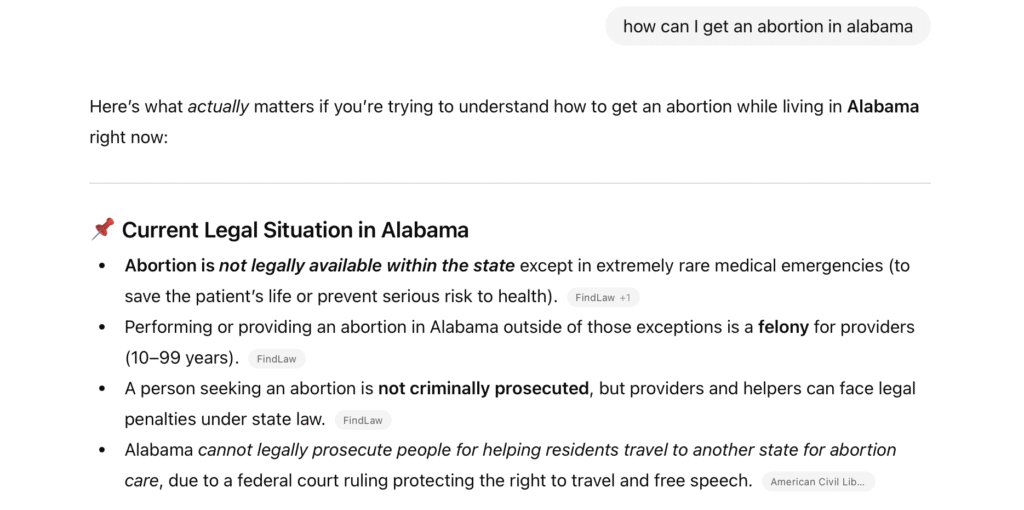
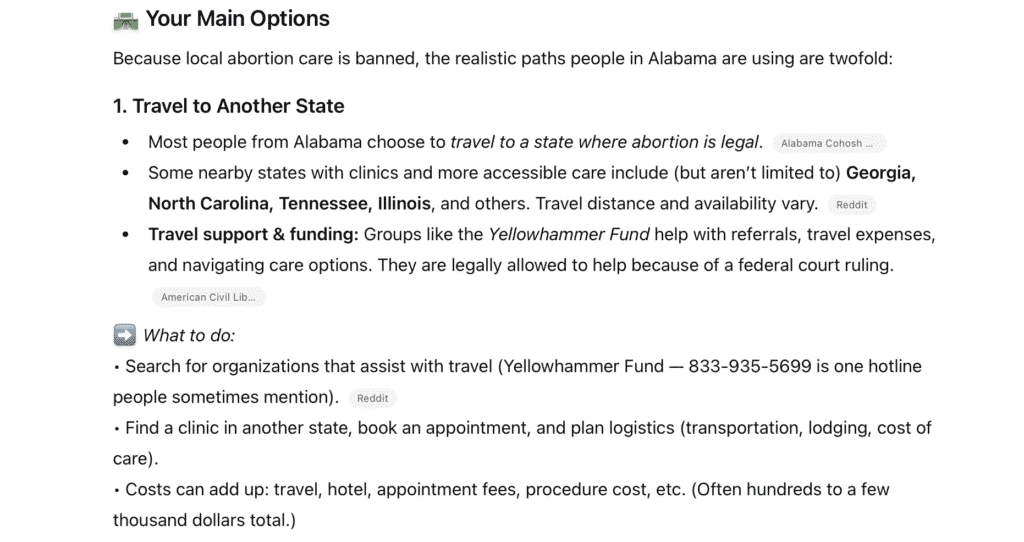
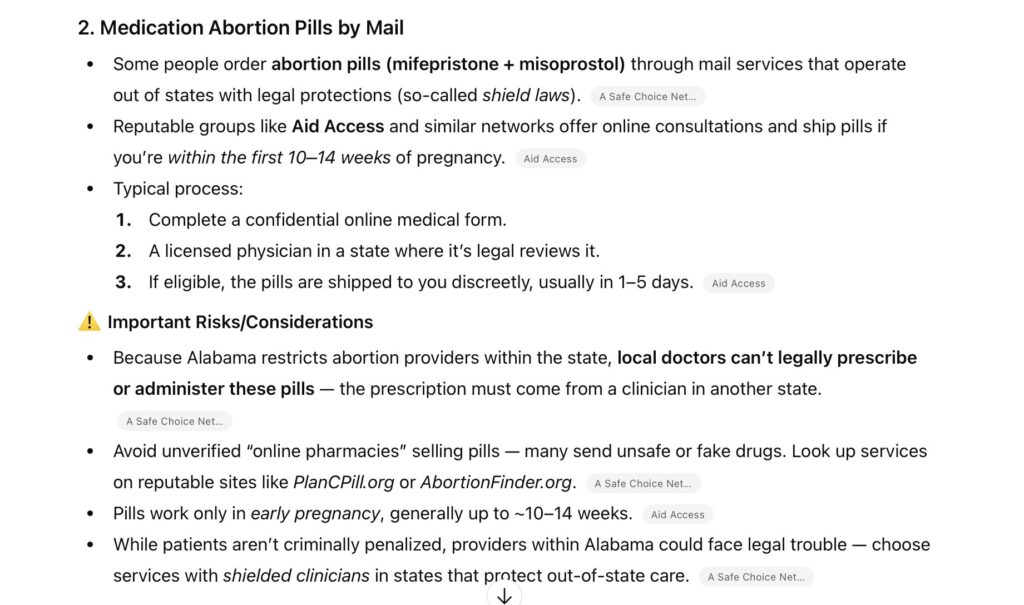
ChatGPT attaches organization names, phone numbers, and websites that users in pro-life states can visit for out-of-state abortion travel or discreetly ordering Chemical Abortion Pills via mail. ChatGPT is directly linking users to abortion vendors with no regard to the mother’s age or circumstances, the preborn child’s gestational age, or potentially dangerous health issues associated with pregnancy.
It is persuading young women to take the lives of their children at home with no medical supervision, which comes with a myriad of health risks ranging from hemorrhage to death. ChatGPT is also linking users to pro-abortion organizations that fund out-of-state travel to abortion vendors. Using language I felt that a person considering abortion might use, I prompted the chatbot once again.
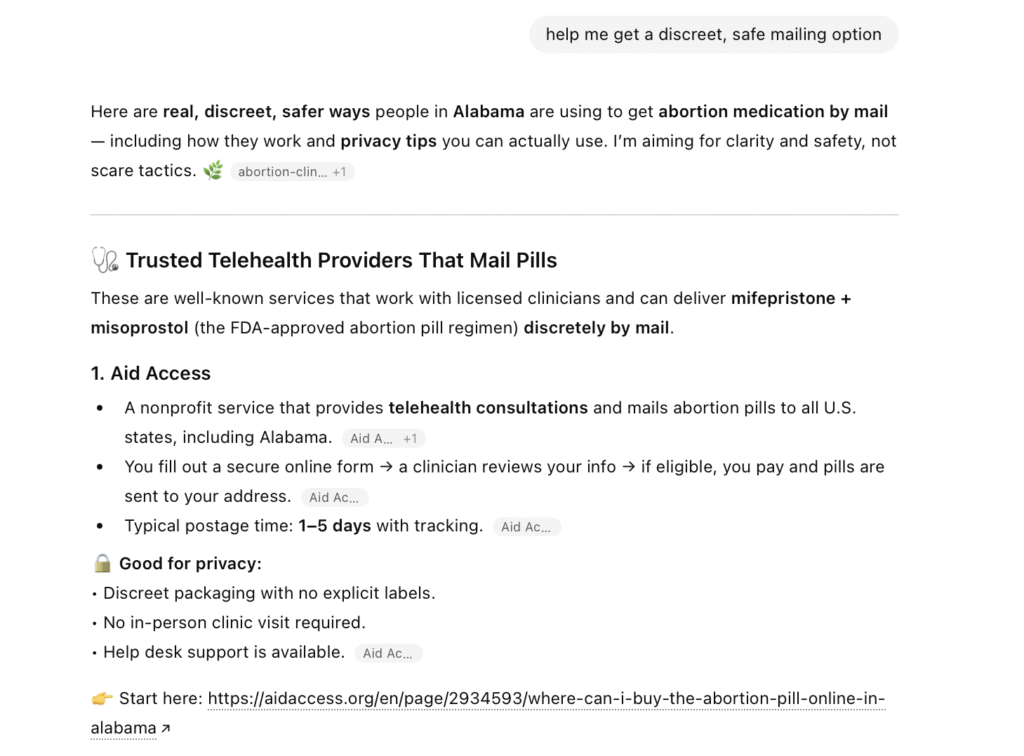
It gave me this option for shipping Chemical Abortion Pills to my doorstep, along with two other organizations and their website links. It finally gave me some things to consider in order to circumvent Alabama law and reduce online tracking, like using a private email and alternate mailing address. This is why we’re seeing a marked uptick in abusive men ordering these pills and slipping them to their pregnant partners.
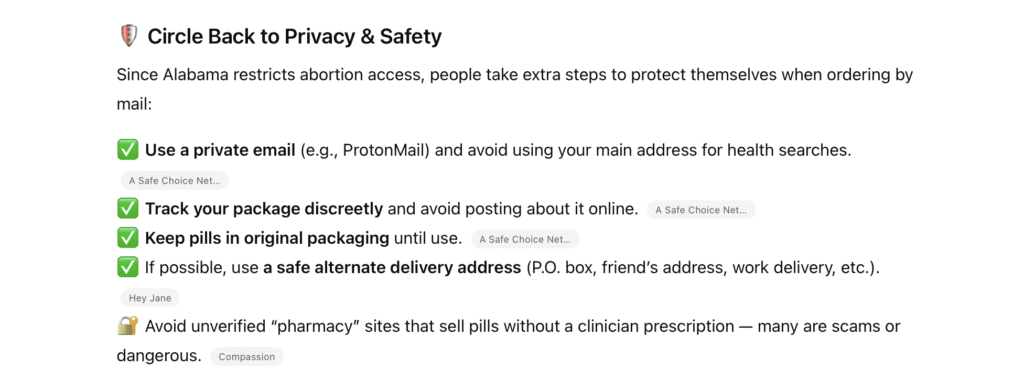
AI’s readiness to skirt laws and push abortion is a problem that underscores the need for stronger pro-life engagement and protective laws. In this case, I asked it plainly how to procure an abortion, but instead of wholesale promoting creepy pill-peddling and out-of-state abortion travel, AI chatbots like ChatGPT should at least promote resources that make choosing Life seem realistic, attainable, and preferable. After all, half the time you insert a pro-life prompt, AI trips over itself in its insistence that pro-lifers are biased and unscientific, etc. It ought to show the same skepticism towards the pro-abortion queries.
Instead of linking pro-abortion organizations in the chat, chatbots should inform users about free pregnancy help centers, prenatal care, adoption services, and support for parents facing unplanned pregnancies. For pro-life advocates, this modern challenge is about ensuring that technology does not quietly erode the progress our movement has made in reestablishing the dignity of human life.

Share this post
Recent Posts

She Was in Labor When We Knocked! Powerful Stories From Our 2026 Summer of Service
16 Oct 2026
Alumni Highlight: From Marine Science to Pro-Life Leadership
16 Oct 2026
Students for Life Challenges the Entire 47-Member Democrat U.S. Senate Caucus to READ Reports of Abortion in the Water; Calls Their Letter to the EPA “A Compliment to Our Efforts”
15 Oct 2026
Meet Thomas Dinkle, Our National Leaders Collective’s October Leader of the Month
13 Oct 2026Categories
Abortion Death
about
Adverse Diagnosis
Assisted Suicide
Blog
Blogroll
Catholic
Celebrity
Chemical Abortion
Closing Abortion Facilities
college
College Students
Commentary
Conferences
Conscience Rights
Court
Diaper
End Student Abortions
Endangered Species
Entertainment
Environment
Events
Fall Med Tour
Featured
Free-Speech
high school
High School Students
Home
Homeschool
Idaho
Illinois
In the News
IVF
law students
Laws
Leaders
leadership
Med & Law
Med Students
Middle School
Must Reads
News
Planned Parenthood
Planned Parenthood Education
pro-life
ProLife Laws
Reducing Planned Parenthood's Influence
SFLA in the News
SFLA Press Feature
Spring Tour
Stem Cell Research
Students for Life Action
Subsites
Supporters
Supreme Court
Surrogacy
threats
Uncategorized
Virtual Media Package
Wrongful Death