
FROM SFLA NEWS
Olivia D'Angelo - 19 Jun 2026
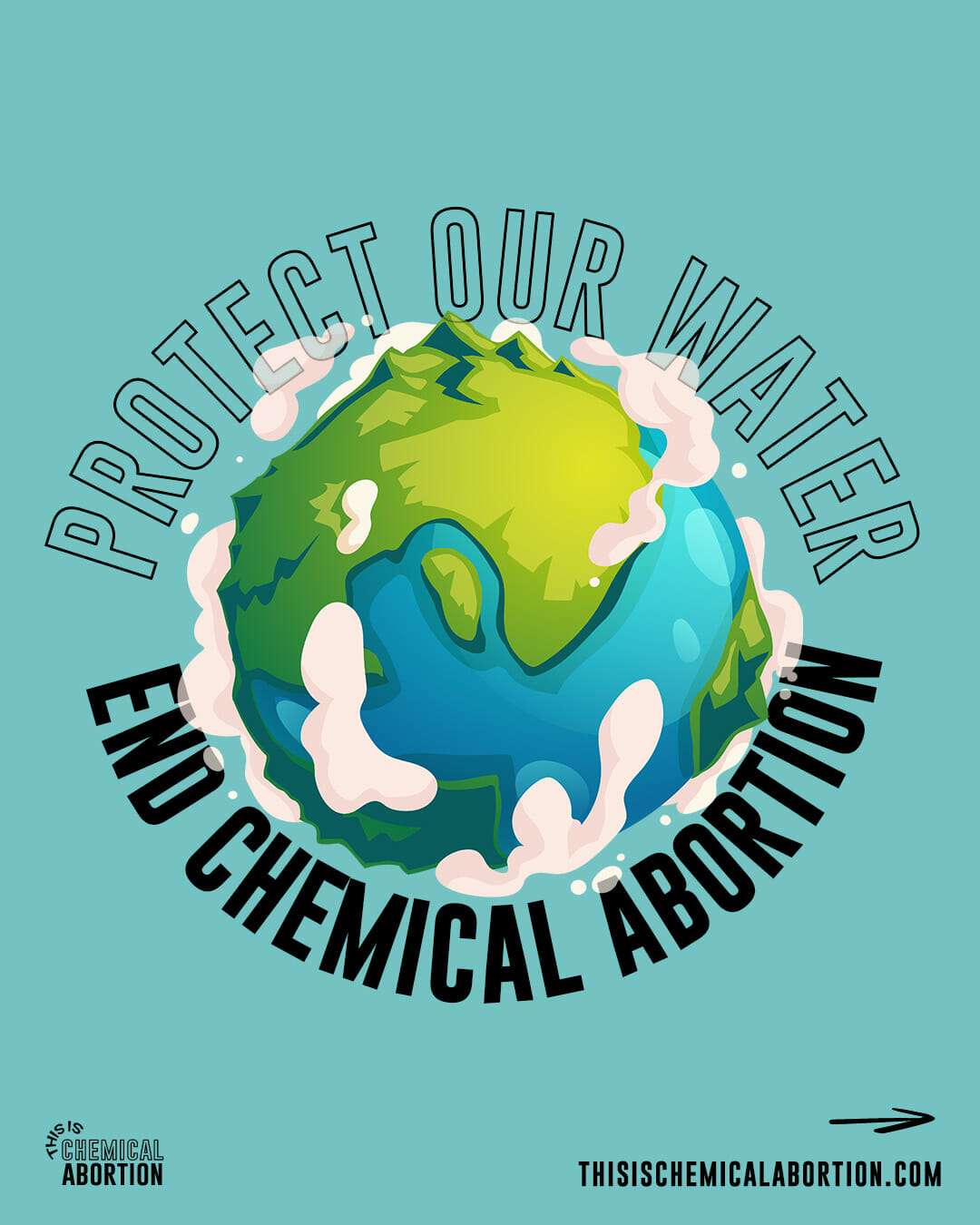
It’s not just pro-life activists and clean water activists demanding the Environmental Protection Agency (EPA) track hormone-disrupting metabolites from Chemical Abortion Pills in our water. Now, doctors and conservationists are speaking out.
The EPA keeps a list of water contaminants they track and regulate for public health safety, updating the list every 5 years. The list is due to be updated this year, and the EPA just finished collecting comments from the public on what should be included.
Students for Life of America (SFLA) spearheaded a campaign to expand the list based on the reality that more than 50 tons of chemically tainted blood and placenta tissue, along with human remains, goes into our waterways every year, as a result of Chemical Abortion Pill deregulation allowing mass, at-home distribution through the mail.
SFLA not only set up a collection for comments from concerned citizens nationwide, we submitted a comment, calling for the active metabolites in mifepristone, the first of two pills in the deadly Chemical Abortion regimen, to be added to the list. As the federal government caused the problem in the last administration, the current administration must work to determine the concentration of fertility-blocking drugs in our drinking water.
And now, doctors and conservationists are adding their voices to the many who are worried about what we are drinking.
The American Association of Pro-Life Obstetricians and Gynecologists (AAPLOG), a medical organization representing around 8,000 medical professionals, submitted a comment asking the EPA to add mifepristone to the list of contaminants.
The comment brings up multiple concerns SFLA has brought into the mainstream, including Biden’s lowered safety regulations in prescribing mifepristone that allowed for mass telehealth prescription and mailing of Chemical Abortion Pills.
AAPLOG’s comment reads:
Mifepristone is a potent progesterone receptor antagonist specifically designed to end the life of a preborn human being early in gestational development. Unlike many pharmaceuticals that become biologically inactive after excretion, concerns have been raised that mifepristone may persist in wastewater streams and enter downstream water systems without meaningful environmental review or monitoring. Despite the staggering growth in usage of the abortion drug mifepristone in the United States over the past two decades, no comprehensive Safe Drinking Water Act assessment, Clean Water Act assessment, or National Environmental Policy Act review has been conducted. This is especially concerning in connection with the major actions taken over the past decade to remove safety requirements under the Risk Evaluation and Mitigation Strategies (REMS), particularly the removal of the requirement for in-person dispensing of mifepristone.
AAPLOG mentions other concerns raised by SFLA, including the lack of required environmental and water testing when mifepristone was approved by the Food and Drug Administration (FDA) and how this may impact public fertility.
“The EPA has already recognized the need to evaluate pharmaceuticals and other biologically active compounds that may pose risks to human health through chronic low-level exposure,” writes AAPLOG in the comment. “Mifepristone, as a synthetic progesterone blocker with direct reproductive effects, clearly warrants inclusion in this review process.”
The American Conservation Coalition (ACC) took the environmental concerns a step further in their comment to the EPA. Representing over 100,000 conservative conservationists, they called for mifepristone’s well-documented negative effects on endangered species, a phenomena SFLA has raised repeatedly.
ACC’s comment gave several examples of animals’ fertility being harmed by exposure to mifepristone:
Within the last decade, a growing body of research has demonstrated that mifepristone possesses significant biological potency at low concentrations, raising critical questions regarding its potential long-term impacts on human health via public water systems. A 2024 study on African clawed frogs found that exposure to mifepristone reduced female reproductive success, with only about half of exposed females successfully reproducing. Exposed frogs also laid fewer eggs overall. Specifically, researchers found that mifepristone disrupted hormone signaling pathways involved in reproduction and caused primarily hormonal and functional effects rather than visible physical damage.
…
Another study conducted in 2013 on zebrafish found that exposure to environmentally relevant concentrations of mifepristone altered reproductive processes, even at low levels.
The conservation organization pointed to the rapid rise in prescriptions for mifepristone since its approval over two decades ago, echoing SFLA’s call that this requires a reevaluation of how it could be affecting the environment.
Furthermore, ACC expressed concern over how mifepristone could be affecting the population’s health in combination with all the other contaminants found in our waterways, stating the “importance of considering mixture-based exposure scenarios in drinking water risk assessment.”
These comments come at the same time as 19 members of Congress and 14 U.S. attorneys general filed comments to the EPA also asking for mifepristone to be added to the list.
SFLA also launched a national campaign that saw thousands of comments submitted to the EPA comment period from concerned citizens.
The EPA may be closed to new comments, but as they review submissions, we cannot be quiet. You do not have to be pro-life to want clean water. All people concerned about public health and safety should want mifepristone added to the contaminants list — or the public health consequences could be dire.
TO READ SFLA’S COMMENT TO THE EPA, CLICK HERE.
FOR MORE INFORMATION ON THE HARMS OF CHEMICAL ABORTION PILLS, READ SFLA’s CITIZEN’S PETITIONS TO THE FDA HERE.
TO LEARN HOW CHEMICAL ABORTION PILL WATER POLLUTION HURTS ENDANGERED SPECIES, READ SFLA’S AMICUS BRIEF IN LOUISIANA’S CASE AGAINST THE FDA HERE.
Share this post
Recent Posts
Doctors & Environmentalists Back SFLA, Demand EPA Track Chemical Abortion Pill in Our Water
19 Jun 2026
WATCH: FOUR Members of Congress Join Students for Life in Celebrating Life and Rededicating America to its Pro-Life Calling
18 Jun 2026
Duke Folds to Pro-Abortion Pressure, Changes Student Health Insurance to Fund Abortion
17 Jun 2026
Justice Alito Sides with SFLA, Says an Indiana Student’s Free Speech Case Needs to be Heard
16 Jun 2026Categories
Abortion Death
about
Adverse Diagnosis
Assisted Suicide
Blog
Blogroll
Catholic
Celebrity
Chemical Abortion
Closing Abortion Facilities
college
College Students
Commentary
Conferences
Conscience Rights
Court
Diaper
End Student Abortions
Endangered Species
Entertainment
Environment
Events
Fall Med Tour
Featured
Free-Speech
high school
High School Students
Home
Illinois
In the News
IVF
law students
Laws
Leaders
leadership
Med & Law
Med Students
Middle School
Must Reads
News
Planned Parenthood
Planned Parenthood Education
pro-life
ProLife Laws
Reducing Planned Parenthood's Influence
SFLA in the News
SFLA Press Feature
Spring Tour
Stem Cell Research
Students for Life Action
Subsites
Supporters
Supreme Court
threats
Uncategorized
Virtual Media Package
Wrongful Death