
FROM SFLA NEWS

Olivia D'Angelo - 16 Jun 2026
There are nine Supreme Court of the United States (SCOTUS) Justices. If five agree on how a case should be ruled, their opinion becomes the legal standard, regardless of disagreement from other Justices.
Recently, a Students for Life of America (SFLA) student’s case against her school for violating her chapter’s free-speech rights came to an end after SCOTUS denied her writ of certiorari for the case E.D. v. Noblesville School District. But it wasn’t a total loss, as one voice sided with the SFLA student — Justice Samuel Alito dissented, saying that rules of free speech at school need clarification from the Court.
Student E.D. first sought justice after the Noblesville School District wrongly denied her the ability to hang fliers advertising her newly-formed SFLA chapter before removing her club’s recognition by the school altogether. The school district’s censorship was upheld by the U.S. Court of Appeals for the Seventh Circuit in 2025.
As previously reported by SFLA:
This case began after Noblesville School District wrongly denied pro-life high school student E.D. the ability to advocate for the preborn by censoring flyers that contained pictures of pro-life advocates holding “Defund Planned Parenthood” placards. After the U.S. Court of Appeals for the Seventh Circuit upheld this censorship in 2025, E.D., her family, and Noblesville Students for Life have filed a petition for writ of certiorari for the case to be heard by SCOTUS.
. . .
Minor student E.D. bravely sought justice in 2021 after her high school in Indiana’s Noblesville School District refused her the right to start a Students for Life organization on campus. While the school hosted other openly political clubs, such as Young Democrats and Gender and Sexuality Alliance, administrators refused to let her and other students advocate for the preborn after she met registration requirements and even showed them materials from Students for Life of America.
While attempting to start a pro-life club on campus, E.D. faced the following acts of discrimination and retribution:
- Repeated rejections of requests to hang a flyer with club meeting information, including photos showing pro-lifers holding “Defund Planned Parenthood” placards.
- School official telling her the school was “dancing on eggshells.”
- Denied the opportunity to promote to her fellow students important and irreplaceable educational and career opportunities in pro-life activism, such as the March for Life or the National Pro-Life Summit, during a unique historical time approaching the fall of Roe v. Wade.
. . .
After working hard to establish Noblesville Students for Life on her high school campus, E.D. asked administrators for approval to post two flyers advertising the club’s first meeting. The over 70 other student groups also had the ability to display such flyers in certain areas of the school. Administrators denied her request, pointing to the flyers’ pictures with pro-lifers holding “Defund Planned Parenthood” signs.
Alito questioned the decision of the rest of the Court to not hear the case. He wrote that the precedent they used to say this legal issue was already addressed, famous educational free speech cases Tinker v. Des Moinesand Hazelwood School District v. Kuhlmeier, “set forth vastly different standards of review for school censorship” that have confused lower courts.
Justice Alito wrote in his dissent:
Since Hazelwood was decided, lower courts have struggled to ascertain its precise limits, and in my view, clarification by this Court is in order. The question addressed in that case is closely related to the question whether expression is “government speech” or private expression.
…
The distinction between private speech and government speech is critical because the Free Speech Clause of the First Amendment constrains censorship of the first category only… Accordingly, “courts must be very careful when a government claims that speech by one or more private speakers is actually government speech,” because “it can be difficult to tell whether the government is using the doctrine ‘as a subterfuge for favoring certain private speakers over others based on viewpoint.’”
Alito wrote that he would have granted the petition to clarify these clear issues with current case law.
“In an appropriate case, we should do so,” wrote Alito.
While Alito’s dissent does not create a new legal standard, it does show the direction the Court could go in the future. Sadly, given all the violations of free speech on school campuses across the country, we will likely be back sooner rather than later. Hopefully, we will get a more favorable ending.
Share this post
Recent Posts
Justice Alito Sides with SFLA, Says an Indiana Student’s Free Speech Case Needs to be Heard
16 Jun 2026
Louisiana Case Reminds Us, Yet Again, That Chemical Abortion Is the Abuser’s Dream
16 Jun 2026
Meet JoJo Ruba: Students for Life’s New Staff Apologist
15 Jun 2026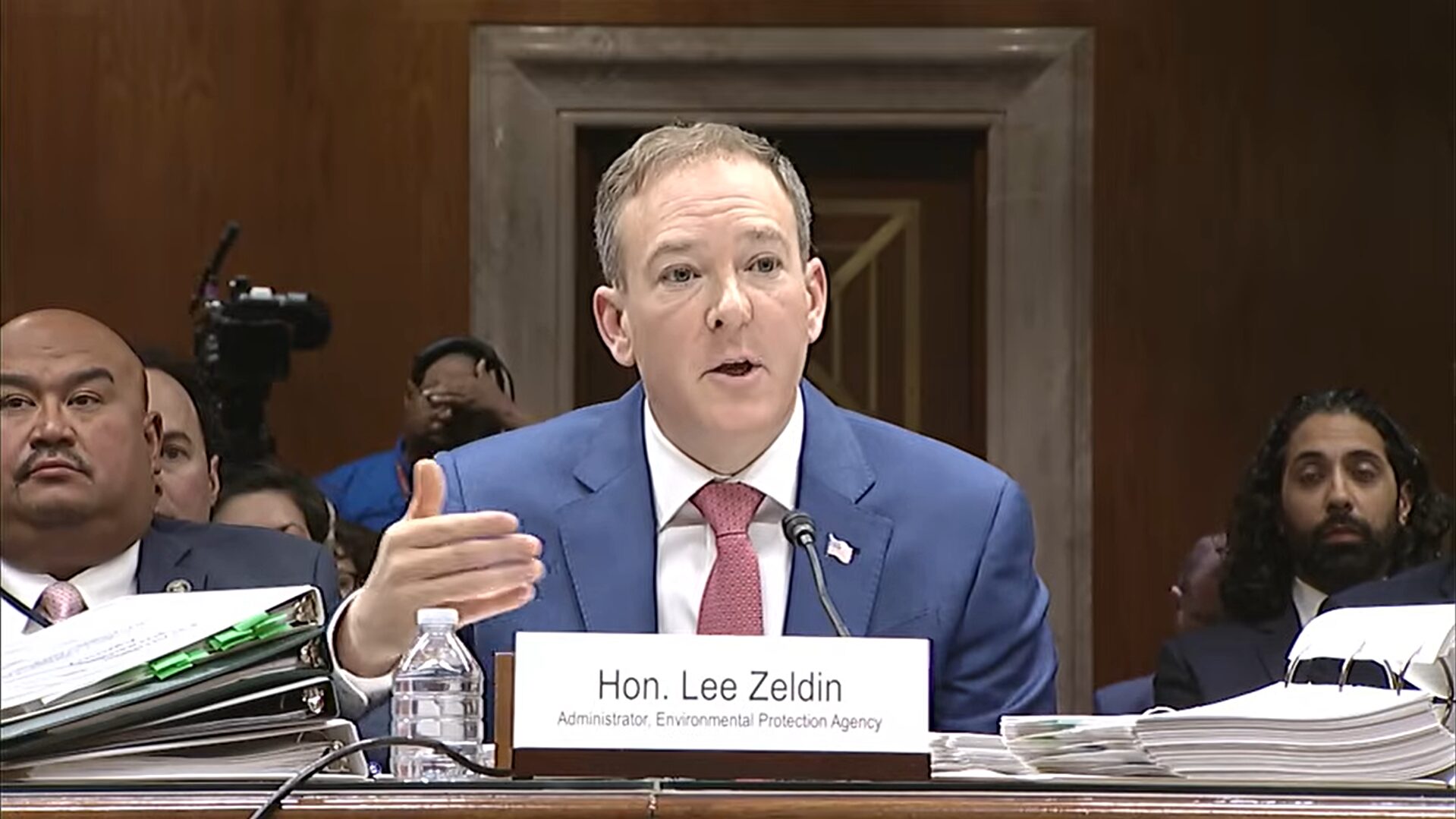
19 Members of Congress Call on EPA to Track Abortion Pills in the Water: Momentum Is on the Side of LIFE
12 Jun 2026Categories
Abortion Death
about
Adverse Diagnosis
Assisted Suicide
Blog
Blogroll
Catholic
Celebrity
Chemical Abortion
Closing Abortion Facilities
college
College Students
Commentary
Conferences
Conscience Rights
Court
Diaper
End Student Abortions
Endangered Species
Entertainment
Environment
Events
Fall Med Tour
Featured
Free-Speech
high school
High School Students
Home
Illinois
In the News
IVF
law students
Laws
Leaders
leadership
Med & Law
Med Students
Middle School
Must Reads
News
Planned Parenthood
Planned Parenthood Education
pro-life
ProLife Laws
Reducing Planned Parenthood's Influence
SFLA in the News
SFLA Press Feature
Spring Tour
Stem Cell Research
Students for Life Action
Subsites
Supporters
Supreme Court
threats
Uncategorized
Virtual Media Package
Wrongful Death