
FROM SFLA NEWS
Mary Mobley - 01 Apr 2026
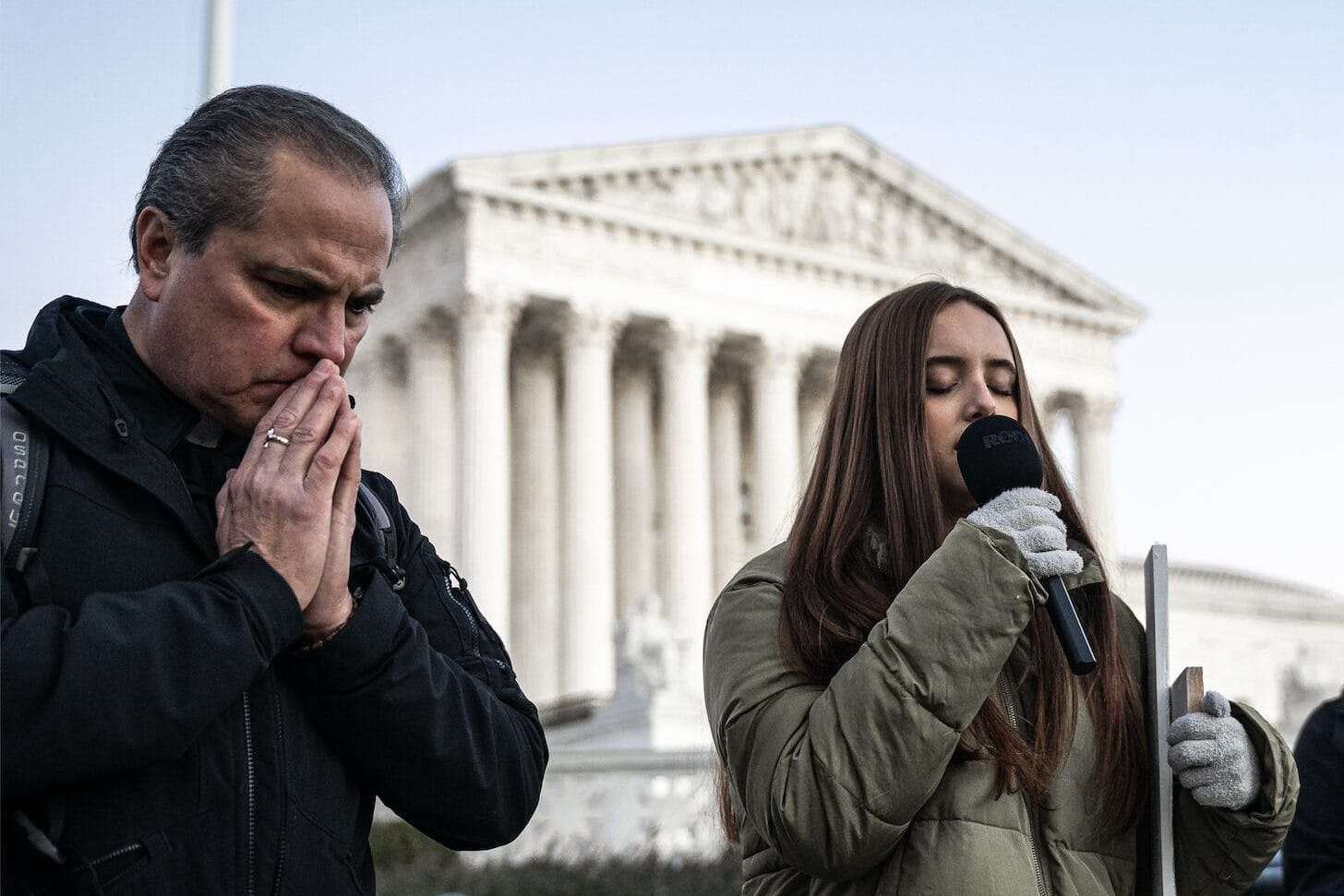
Today, the Supreme Court heard arguments in Trump v. Barbara, a case concerning whether babies born on U.S. soil automatically receive citizenship.
More specifically, the case focused on whether all babies born in the U.S. receive citizenship, no matter their parentage, or whether only babies born to lawful permanent residents of the U.S. (as opposed to illegal immigrants) receive citizenship.
What did the discussion ignore? The protections the Fourteenth Amendment grants to all people, regardless of citizenship — protections that are currently being withheld from the most vulnerable members of society.
The Fourteenth Amendment, the legal principle in question, reads, “All persons born or naturalized in the United States, and subject to the jurisdiction thereof, are citizens of the United States.”
The debate at the court hinged on the definition of “subject to the jurisdiction thereof.”
On the one side, the Trump administration argued that illegal immigrants are not subject to the jurisdiction of the United States — meaning that their children do not automatically receive citizenship just by being born in the U.S.
On the other side, the ACLU argued, essentially, that everyone in the U.S. is “subject to” its jurisdiction, regardless of whether they are there legally, since everyone in the U.S. is bound by U.S. law.
According to the ACLU, that even includes children of U.S. enemies. In response to questions from the justices, the ACLU’s lawyer noted that even a child born to Iranian nationals — a child that, under Iranian law, would be required to serve in the country’s military — would be a U.S. citizen if born on U.S soil. (That’s even though the ACLU categorically refuses to acknowledge the existence of any sort of rights or protections for pre-born babies, instead insisting that mothers have a right to abort their babies.)
READ MORE: ACLU INSISTS Illegals Should Have More Rights Than Preborn Americans
Why is this such a divisive issue?
Because U.S. citizens possess certain rights and privileges that aren’t granted to non-citizens, making citizenship a valuable commodity. So, the discussion focused on whether the Fourteenth Amendment does in fact grant automatic citizenship to children born in the U.S.
And yet, they failed to take into account the constitutional rights of those still in the womb.
The Fourteenth Amendment says that no state shall “deprive any person of life, liberty, or property” or “deny to any person… the equal protection of the laws.”
The Fourteenth Amendment’s use of the word “person” guarantees due process and equal protection to all members of the human species. In fact, it does even more: Historically, its use of “person” has been interpreted to the broadest possible extent, including even corporations under its protection.
A historical examination reveals that at the time the Fourteenth Amendment was written, both the public and the amendment’s writers understood what is still true today: that preborn babies are people, and they are therefore protected under the Fourteenth Amendment.
The Fourteenth Amendment was written post-Civil War with the goal of protecting former slaves from discrimination and mistreatment, guaranteeing that they received equal protection to which they were entitled. Throughout American history, the amendment has protected the most vulnerable in society, ensuring that everyone, regardless of race, age, or gender, receives fair treatment under the law.
Today, preborn babies are the only group in the United States that can be deprived of their right to life. They’re exactly who the Fourteenth Amendment should protect. And it’s time for the Supreme Court to affirm that once and for all.
Share this post
Recent Posts
Supreme Court Takes Up Birthright Citizenship—And Ignores Rights of Preborn Babies
01 Apr 2026
Equipped for Courage: Julia Heth’s Path from Pro‑Life Advocacy to Missionary Work
01 Apr 2026
Students for Life’s March Group of the Month
31 Mar 2026
5 Most Unhinged Pro-Abortion Things from My University Last Year
31 Mar 2026Categories
Abortion Death
about
Adverse Diagnosis
Assisted Suicide
Blog
Blogroll
Chemical Abortion
Closing Abortion Facilities
college
College Students
Commentary
Conferences
Conscience Rights
Diaper
End Student Abortions
Events
Fall Med Tour
Featured
Free-Speech
high school
High School Students
Home
Illinois
In the News
IVF
law students
Laws
Leaders
leadership
Med & Law
Med Students
Middle School
Must Reads
News
Planned Parenthood
Planned Parenthood Education
pro-life
ProLife Laws
Reducing Planned Parenthood's Influence
SFLA in the News
SFLA Press Feature
Spring Tour
Stem Cell Research
Students for Life Action
Subsites
Supporters
Supreme Court
threats
Uncategorized
Virtual Media Package
Wrongful Death