
Historically Black College or University Groups

In music, faith, food, colors, entertainment, and family, Black culture has always celebrated Life. However, somewhere along the way, Big Abortion began promoting the lie that members of minority communities need abortion to succeed. That lie has produced disastrous outcomes in the Black community over the past five decades. Since the Roe v. Wade and Doe v. Bolton decisions legalized abortion in 1973, more than 20 million Black babies have been aborteda number equivalent to the entire African-American population in 1964, the year the Civil Rights Act was passed.

Today, despite the fact that Black Americans make up about 14% of the overall population, roughly 40% of U.S. abortions are committed on Black babies. If the abortion industry isn't targeting the Black community, it’s hard to explain why Black children are aborted at such a high rate.

Beyond this sad loss of babies’ lives, Black women and men are also being hurt by abortion. Often poorly treated and uninformed by the abortion industry, women are physically at risk of damage to their cervix, uterus, or other organs​, and they suffer an increased chance of breast cancer, infection, sepsis, maternal death, and more. Psychologically, women with abortion experience are 81% more likely to experience mental health problems, such as substance abuse and suicidal ideation. More than 70% of men also report experiencing “adverse changes” after abortion, including depression, anxiety, and substance abuse.

Do you want to see this change in the Black community? Now is the time to make life-affirming changes at your Historically Black College or University!

The steps to starting an officially recognized student group at an HBCU campus can be found here. When you start a SFLA group at an HBCU Campus, you are provided with special and personalized mentorship from SFLA Pacific Northwest Regional Coordinator Allison Clements, along with support from your SFLA Regional Coordinator.

NEXT STEPS:

  1. Contact Allison Clements, SFLA's Pacific Northwest Regional Coordinator and Lead Coordinator for HBCU campuses.
  2. Sign up to start a group on your HBCU campus.
  3. Create an online profile at Students for Life HQ, where you can receive free online trainings, resources, and materials to use on campus.
Image
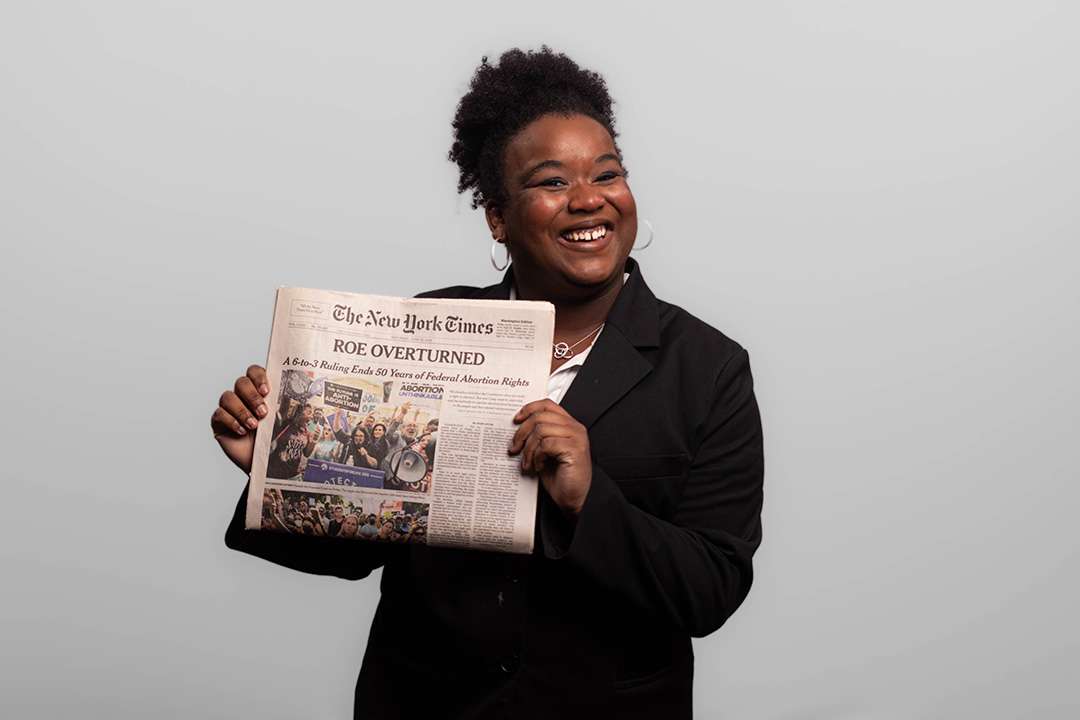
My name is Allison Clements, and I am the SFLA Pacific Northwest Regional Coordinator and Lead Coordinator for HBCU campuses. I would love the opportunity to connect with you about how to change your campus to one that will celebrate Black Life. I am also available to engage with others on your campus to have an honest conversation about the history and the effects of abortion on the Black community.

What is the Number 1 Killer of the Black Community?

Abortion is the number one killer of Black lives in the United States. It exceeds the death rate of HIV, diabetes, heart disease, and cancer combined according to the CDC and the pro-abortion Guttmacher Institute. We see this by comparing the number of Black deaths in 2023 (385,399) to the number of Black abortions (approximately 409,615) in the same year. (This number represents 40% of the estimated 1,037,000 total abortions in 2023.)

True or False: Black babies are four times more likely to be aborted than other babies.

True. Black women have been the target of the abortion industry since the beginning. (In fact, because these calculations are based on estimates, the number may be even higher.) Planned Parenthood’s founder, Margaret Sanger, was a known eugenicist who called Black people “weeds.” We will always stand against racist organizations and promote holistic, life-affirming health care for Black women.

How many Black babies die from abortion every day in America?

At least 400 Black babies die every day in America. The actual number is likely even higher, as the 400 is based on data from only 32 reporting states, according to the CDC’s most recent surveillance report. Extrapolating from other CDC data, the number could be almost three times as high.

How many Planned Parenthood facilities are in minority neighborhoods?

Nearly 80% of their surgical facilities are all located within walking distance of Black or Hispanic neighborhoods. This is not a coincidence; it’s a strategy.

Where can Black Americans turn for support instead of abortion?

16,000+ nationwide Federally Qualified Health Center service sites offer men, women, and children low-cost, comprehensive care. For all-around support networks, organizations like Standing With You provide families in need with financial help, housing, child care, etc.

start a students for life group on your hbcu campus