
“I mean, it’s like, one cell.”: The Case for Personhood


“I mean, it’s like, one cell.”: The Case for Personhood

By: Catherine Phillips, Students for Life of America’s 2012 Missionary for Life

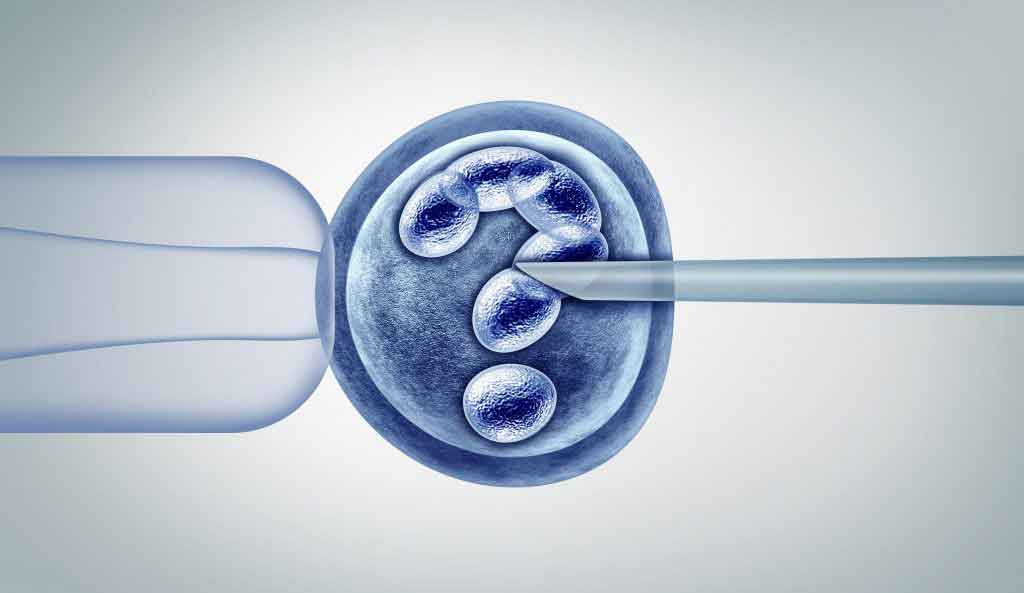
The other day, I overheard a young woman wearing a Planned Parenthood Action Fund t-shirt, make this statement: “I mean, it’s like, one cell. It’s not a baby yet so I don’t think abortion is wrong.” The young female reporter interviewing her agreed.

It got me thinking that it might be worth it to spend a post exploring the personhood of the unborn. In my previous blog post, I stated the following:

Is the fetus in the womb a baby?
There is a clear answer to this. Even those in support of abortion (well, most) don’t try to deny
that yes, there is a baby inside the womb.

In that post, I go on to say that if the preborn is truly a person, then elective abortion is always
wrong, because it is killing a person without justification (elective abortion: that is, abortions for
economic, emotional, social, or any other arbitrary reason; i.e. not the kind of abortions done
to save the life of the mother. Elective abortions make up the vast majority of abortions done in
the U.S., and elective abortions are what pro-lifers are fighting to abolish).

Well, I want to take a step back even further and explain how, from the moment of
fertilization, the tiny living organism inside the womb is a human being: genetically distinct,
human, alive, and whole. I am not claiming that an embryo is a mature human being, because
obviously much happens during the 9 months of gestation, but I am claiming that an embryo
is a member of the human species. An embryo is a human at a different stage in development
than you, but a human that deserves to be treated like a human, namely in having the express
right simply not to be killed.

And this is not just my claim. This is scientific fact that gets all too often ignored in the pro-life/
pro-choice debate.

1. Genetically distinct: Sperm and egg cease to exist at fertilization, as they form a new entity,
the embryo, which starts as one cell, but with an entirely new chromosomal structure This
embryo has everything it needs to direct its own development.
2. Living: This is pretty obvious, because dead things don’t grow. The embryo exhibits the
three scientific characteristics of living things: 1, Reaction to stimuli, 2. Converting food into
energy, and 3. Cellular reproduction (growth).
3. Human: Human parents produce human offspring. If it’s not human now, how do you
explain that an embryo that is not aborted comes out of the womb as a human baby? An
embryo has the genetic constitution which defines human beings.
4. Whole: After conception, the embryo is a whole and complete living organism rather than
part of another living entity. All of its cells are working toward its own growth, and it is fully
programmed to develop itself into the next mature stage of a human being.

Now, it may be hard to fathom how a one-celled organism (if we’re talkin’ zygotes), or multi-
celled-but-still-tiny organism (if we’re talkin’ embryos or fetuses) is really a person. But how can
something be human, yet not a person? The truth is, it can’t. Stephen Schwarz came up with
the acronym SLED to describe the differences between the embryo you once were, and the
adult you are today. These differences are due to the age of the human person. An embryo and
a baby in a highchair, a toddler and a teenybopper, a yuppie and an elderly man with a walking
stick—all of their differences are due to age.

  • SIZE: An embryo is much smaller than you or me, but does size constitute a person? Is an overweight adult more of a person than a small toddler? Is a “midget” less of a person than someone of regular size? Size does not define personhood. The fact that embryos are too small to see or fathom, however, does make abortion much more easily justifiable.
  • LEVEL OF DEVELOPMENT: Embryos are much less developed than we are as adult humans. But does level of development constitute personhood? Is an expert chess-player more of a person than someone who does not know the game, because they are more developed in this skill? Are newborns not people because they do not have self-awareness? Level of development does not define personhood. The fact that very young embryos are not developed enough to feel pain, however, does ease the conscience of advocates for abortion.
  • ENVIRONMENT: Some people mistakenly claim that a human being is not a person when it is still inside the womb. But is your personhood dependent on where you are? How could a journey down the birth canal change the essential nature of the unborn from non-human to human? The value of a person does not depend on its environment.
  • DEGREE OF DEPENDENCY: Others claim that because an embryo is still dependent on its mother’s body inside the womb, it must not be a full person yet. Just because a human being at this very early stage in its development depends on its mother’s nutrients does not mean that it is not a person. It is simply a very young person. Claiming otherwise would be like saying a person who needs a respirator to breathe temporarily is no longer a person. The value of a person does not depend on its dependence on others.

We started with establishing that the preborn/embryos/fetusus (whatever term you like)
are indeed human. Genetically distinct, alive, and whole. That is not scientifically disputed.
(for example: “A zygote is the beginning of a new human being.” –Moore and Persaud, The
Developing Human). Then I described how it makes no sense to say that someone could
be “human, but not a person,” because the differences between the preborn and us come
down to size, level of development, environment, and dependency; and none of these
constitute personhood.

As Stephanie Gray, an amazing pro-life speaker I once heard, said: “Abortion boils down to age
discrimination.” Think about it.

Written with assistance from The Case for Life by Scott Klusendorf.

On Keeping It Simple

On Keeping it simple

By: Catherine Phillips, Students for Life of America’s 2012 Missionary for Life

The abortion debate can get pretty complicated at times. You and a friend start talking about it, and your conversation can jump around in so many directions—from the facts of fetal development to the language of the Constitutional to the gravity of crisis pregnancy situations to what would happen if abortion actually were illegal—and wind up exhausting both of you to the point that you sigh and move on to a less taxing topic of discussion.

Well, I’d like to have a short conversation with you right now about abortion. And we’ll keep it
simple. Because really, it doesn’t have to be that complicated.

Let’s start here.
Is the fetus in the womb a baby?
There is a clear answer to this. Even those in support of abortion (well, most) don’t try to deny
that yes, there is a baby inside the womb—that is what makes the woman pregnant. If there’s
no baby, why the need for an abortion?
Next question, and really the final question, then: Does a woman have a right to [an abortion]?
Reworded: Does a woman have a right to [kill her child in the womb]? (no fancy rhetoric here,
I’m still working off facts.)
Well, last time I checked, the Constitution does not protect the right for a civilian to kill another
human being, and we’ve already determined that the baby in the womb is a human being.

Could it really be that simple? All name-calling and misinformation and distracting arguments
aside, yes. It really can be.

Consider the following story. A worried woman goes to her gynecologist asking for help. “My
baby is not even one year old and I’m pregnant again. I don’t want kids so close together.”
The doctor asks what she wants him to do. “I want you to end my pregnancy,” she says. The
doctor thinks for a little, and offers another solution to the woman. “Let’s kill the one in your
arms. This way, you could rest some before the other one is born.” The woman is horrified and
exclaims “No, doctor! It is a crime to kill a child!” The doctor replies, “I agree. But you seemed
to be okay with it, so that seemed the best solution.” …what is the difference between killing a
child that’s already been born and killing one that’s still in the womb?

Abortion is killing. Plain and simple. There’s no need to point fingers or place blame, at either
those who perform abortions or the women convinced that they have no other choice. But
there is a need for action. The question for us as a nation, and for you as an individual is: should
the United States, a country which claims to protect each person’s basic human rights to life,
liberty, and the pursuit of happiness, sanction the taking of 3,700 innocent lives each day, all in
the name of this misunderstood “choice”?

If so many women are choosing abortion in this country as if killing their child is the best way

for them to continue with their lives, obviously something needs to change. Pregnant women
need to be assisted with their pregnancies and celebrated, not made to feel like their best
choice is to literally “get rid” of the problem. We need to rethink the way we respond to the
news of a pregnancy. “Are you going to keep it?” should never be a question. Think about it—
you are literally asking a new mother if she is going to kill her baby or not. What if our society
asked this instead: “what can I do to help you?” and then, what if we actually did just that?
What if we devoted our resources and energies into helping women carry their unexpected
pregnancies to term, rather than helping women end those pregnancies?

Just because our society today has accepted abortion as an acceptable “choice” for women,
does not mean that you have to. Take a stand against this injustice. Don’t be afraid to be pro-
life. Certainly you can get a lot more in-depth with your facts and arguments than I just did, but
really, it’s quite simple.

“I dream of a world where we can commit our social resources to the development of human life
and not to its destruction.” –Benazir Bhutto

“If we accept that a mother can kill even her own child, how can we tell other people to not kill
each other? Any country that accepts abortion is not teaching its people to love, but to use any
violence to get what they want.” – Mother Teresa